The 12 Days of Breeders is a series of interviews conducted with members of the Dog Breeder Society who are doing innovative, creative, and inspiring things in their dog breeding business. In each of these interviews we cover challenges each breeder has encountered, and how they've overcome those challenges to find success in their breeding program. Join me for all twelve of these interviews for inspiration, and countless actionable tips you can use to overcome (or avoid) challenges in your own dog breeding program! You can check out all of the interviews in this series here.
McKenze Ocampo & Twilight Doodles
In this 12 Days of Breeders interview, we welcome McKenze Ocampo of Twilight Doodles in Dallas, Texas to share the experience and expertise she’s used to build a thriving breeding business. McKenze discusses the daily discipline, continuous education, and fierce personal drive that has helped her build Twilight Doodles. You'll learn how she created a unique and authentic brand identity that sets her program apart, establishing immediate professionalism from day one. Crucially, McKenze reveals the power of her detailed record-keeping system, which provides non-stop, transparent support to her buyers. Plus, hear her powerful challenge: "If you are unteachable, maybe that’s the time to stop doing something." If you're ready to master the business side of breeding without sacrificing passion, this episode is a blueprint for scaling success.
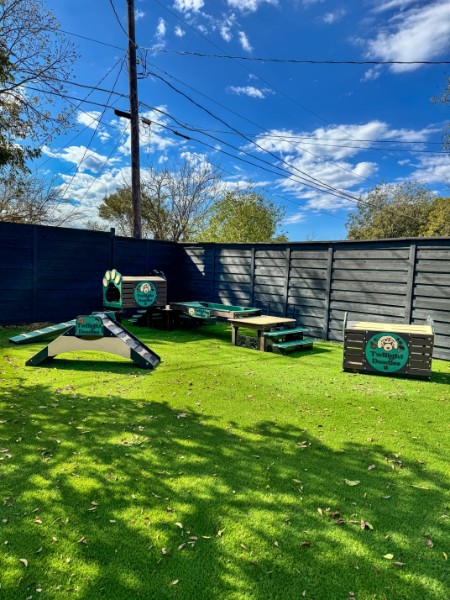
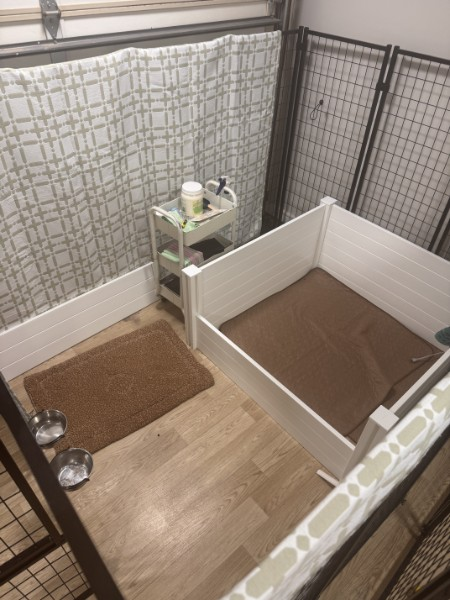
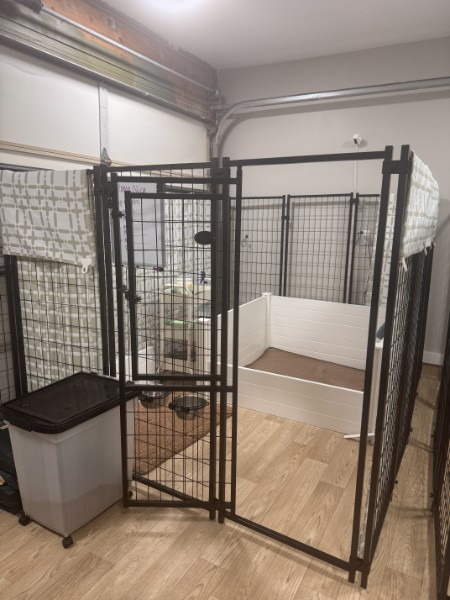
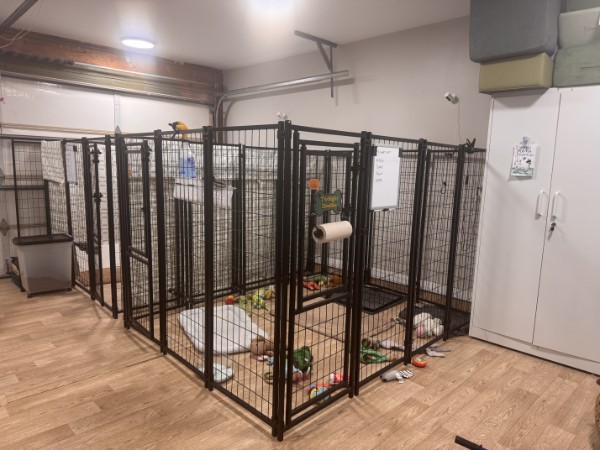
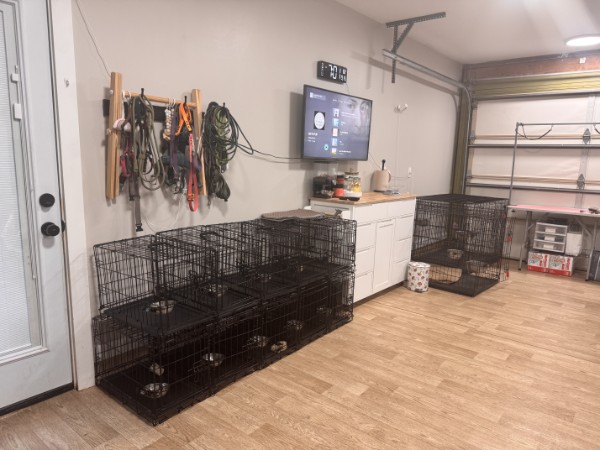
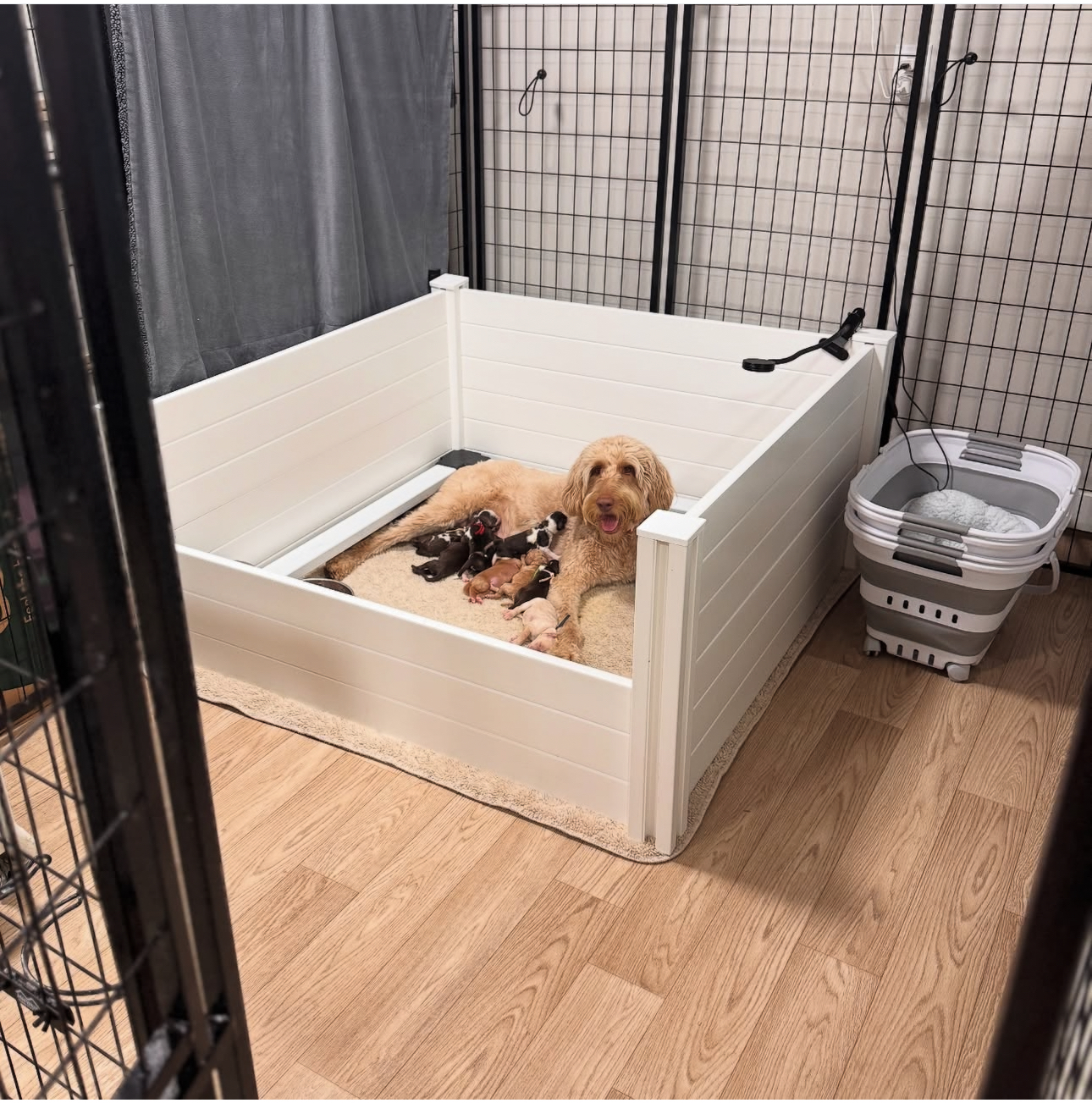
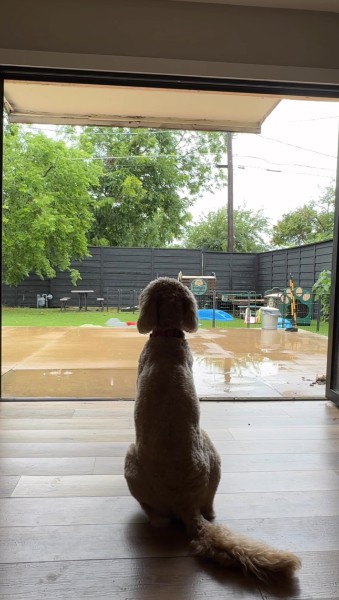
McKenze's Puppyscape & Whelping/Puppy-Rearing Facilities
Transcript
Julie Swan | 0:00
Welcome to the Honest Dog Breeder Podcast with me, your host Julie Swan, where each week we dive in to discuss all things dog breeding so you can build a breeding business you love, producing dogs that fulfill their owner's dreams. I believe you can have an honest dog breeding program that also pays the bills. So throw those pods in your ears while you're cleaning kennels, I'd love to join you.
Welcome back to 12 Days of Breeders. Today we have McKenze Ocampo of Twilight Doodles in Dallas, Texas. McKenze, thanks so much for coming on.
I'm so excited to share your story.
McKenze Ocampo | 0:36
Well, you know, I love you, love you, love you. So I am honored to be here and was giddy when you asked me.
Julie Swan | 0:42
So exciting to have you. Alright, so you have standard size Goldendoodles, right? So tell us, how did you get into Goldendoodles?
How did you get into breeding?
McKenze Ocampo | 0:55
Well, we had a family, me and my husband have three children. And so we were just living our lives here in the burbs. And my husband really wanted a dog, we hadn't had a dog in a while.
And so we felt like, okay, our kids are mature enough to bring in a puppy. Maybe they're not, you know, making messes every single moment of the day. And so my husband really wanted a Golden Retriever.
And I said, I can handle three kids, okay. I don't know if I can handle three kids and all the shedding. I'm not the greatest housekeeper.
So I said, let's look for something different. So then I'm working in my normal life job, which I work in a dental office. And my boss brought in her majestic standard poodle.
And I thought, oh, my gosh, I've never seen a creature. This is fabulous. So I come home and I'm gushing about this dog, in its show coat.
And my husband said, absolutely not. We are not getting a fufu dog. And I said, well, shoot.
So here I am scouring the internet for something, I want a dog, but I don't really know what breed. I want a big dog. So I came across the GANA, which is the Goldendoodle Association of North America, because if I'm going to do something it's going to be 110%, I'm going to find the best bred dog I can find. And so I came across a breeder here in Texas that had a litter, and they had one chocolate Goldendoodle.
And I thought, that puppy needs to be mine. I think that puppy needs to be mine. So I bought that dog.
Actually on a spay neuter contract, I was picked number seven of a litter of eight and call it higher power, juju, whatever he came to me. So fast forward about six months, we add another dog. And watching Corduroy grow up, he's my heart dog.
I was so interested in everything that breeder was doing, all of the curriculum, and all the handling that they were doing. And it just sparked my interest so much. I was already in love with early childhood education for my kids.
My kids went to a Montessori school and I had dove into that. And then watching the mama whelp the puppies, and raise the puppies, pieces of my life just kept coming in from that.
Julie Swan | 3:15
It was just fascinating for you, right?
McKenze Ocampo | 3:17
Yeah, yeah.
Julie Swan | 3:19
This whole, what would be different?
Like how you could raise a puppy like you do with a kid.
McKenze Ocampo | 3:24
Yeah. Yes. This pour in that you can do in day three of life is just fascinating to me. And then watching them now, I get to see that in real time. It's just amazing.
Julie Swan | 3:36
So you're like bothering the breeder all the time, or like, how was this?
McKenze Ocampo | 3:42
I mean, I know my personality. I'm very self-aware of the kind of person that I am.
You know, it's like I said, it's 110 usually. And so I found out the curriculum they were doing, bought the book, found out all these acronyms that they were using. And I'm Googling figuring out who started that and why did they do it?
And what does it do for the dog? Just totally immersing myself into this experience that we were having. Because my kids were watching the videos. I mean, my whole family was involved.
We were very excited to bring home this puppy. And so I tried to not bother the breeder too much, but also was inquiring about, like, tell me more about that. So loving all that, watching the mom nurse, I had previously helped with breastfeeding mothers in my life, volunteered for an organization that we helped moms, and then childhood education and just the customer service of it all too, they later became my mentor, and something that they told me was love your business.
That was something in my working life that I already felt, I love the practice, the dental practice that I worked for. And it's important to me that when the doctor does well, everybody does well. And so I understood that.
So we have Corduroy and then I bought another dog, again, not to breed, just to have pets.
Julie Swan | 5:10
So you didn't have this breeding bug yet. You were just fascinated, and they're like, well, we love what we do, and you've got to love your business. And okay. All right.
So now you've got another one. Because you know, you've got to have more than one, right? It's so hard to have just one.
McKenze Ocampo | 5:27
You know, I have three kids because I wanted one kid.
So we get another, we get a female, and I'm starting to get alert and nervous because I have this spay-neuter contract and it's very serious to me. I don't want to mess anything up. And so I schedule my boy to be neutered, and I get a text message from the breeder and they're like, "Hey, can we talk with you?"
And I'm like, "Oh no, what have I done? I've breached the contract. I've done something wrong."
And so we're supposed to talk on Saturday. Corduroy's scheduled on Friday, and I said, "well, yeah, but is everything okay?" I'm like, please don't leave me on the hook. You know, it's Tuesday.
Tell me what's happening. So they're like, "could you talk now?" So I leave work, I get in the car, I get on this call with them and they're like, "Hey, have you ever thought about breeding your boy?"
And I say, no, because I hadn't, I was just so intrigued by everything you did. I just wanted to know more about what you were doing, but no, I hadn't thought about breeding because I very much signed this contract with you. So they're asking me, "would you be interested in doing it?"
And I'm like, well, I think so, but I think I need to have a conversation with my husband and then maybe pray on it. Think about it. That's the whole trajectory of my life changing.
So I need a minute to reel that in and make a calm decision. While also in my head saying, Oh my gosh, yes. Oh my gosh.
Yes. Yes. Yes. Yes. A million times. Yes. I want to do this.
So I come home, I tell my husband and he's like, okay, well, would we make money doing this? Because let's be honest here. We're going to run a business.
He's a guy. And I say, I think so. And he said, okay, cool.
Let's do it. You paid a lot of money for these dogs. Let's make them.
Julie Swan | 7:26
I think that's so funny. A lot of guys think that, "oh, I'll just get my investment back."
McKenze Ocampo | 7:29
Yeah. And he's like, "a litter or two, whatever. It's fine. No big deal." So I reached out to the other dogs breeder first, and got their blessing, paid the fee for breeding rights from them, and then did the same for Corduroy. And then I'm on this journey of going back to GANA, joining GANA, finding out all the health testing that was required, because I have a mixed breed, I'm doing the testing that is both required for Poodles and Golden Retrievers.
So all the OFAs, all the genetic testing, and then just making sure temperaments, my puppies were still young at that point. So let's see what their temperaments are like. So as I'm going through the health testing with these first, what should have been my foundation dogs, first blow to the system was my girl failed.
She did not pass her hip testing. And so I had raised her, I had her tested at a year. So I'm like, okay, well, we're in this, gathering supplies and still doing tons of education, joining, listening to your podcast, finding out how to run my business correctly.
And then finding out, no, you get to start back and get a new female because the one you have is not going to work out. So found out that not everybody honors their contracts. Which again, another blow.
So I ended up bringing in two other girls in a very short period of time, which thankfully, they were close to breeding age, one of them was breeding age. So I get all of their testing done as quickly as I can, just to keep the ball rolling. And then had my first litter, October of 2023.
And I tell everybody that I had initiation by blowtorch. I had all of these hurdles to get to the litter. And then I'm like, okay, finally, we're having puppies, we're here, we did it.
I get to ride the bicycle now. All of this, two years of education that I've done to get to this point, I get to put it all to work and put it all to practice and prove myself as a breeder. And then, you know, things happen.
And we lost two puppies from that first litter. And man, if that does not teach you that this -ish is hard. It's hard for your family here in your house.
It's hard for families after the puppies go home. And then, just walking through that with people and learning that, like I said, you love your business, but you also love your clients. It's a tough lesson.
And I feel like now I'm going into litter eight, I can support them so much better, because I went through that really tough stuff. And I know that there is light at the end of it. And I'm loving that I'm at the point now where I feel that I've hit my stride.
When someone asked me a question, I'm not like, "um, I don't know the answer, but I can find it for you." Now, I can more confidently say, "okay, this is what I typically see." Or "this is how I can help you with that."
Julie Swan | 11:04
And when did you think you really felt that transition about how many litters in?
McKenze Ocampo | 11:09
I would say by litter three for puppies, for the puppies, raising the litter, all of that. But because I had first litter moms, always the first litter is a real learning curve. So my first two litters were from the same mom.
And then I had three girls in a row, all new moms. And you really learn that every whelping is so different, especially with a first time mom. And then sometimes when you go into a second litter with the mom, you're like, "oh, last time it was this," then now this time we're at 3am.
And you're a very different dog at 3am than you are at 12 noon. I feel like the raising of the puppies, the individualizing those puppies still, is something that is really, really important to me. I feel like I haven't been doing this so long that I'm like, "oh, you know, the whole litter, just they're just one little pod that goes in together."
I still work very hard to see every puppy just as who they are. But then also knowing that there's some herding that happens, like "everybody's got to learn to walk outside guys, come on." We're gonna do this. We're gonna learn this in the next two days. You can do it.
Julie Swan | 12:31
Oh, yeah.
McKenze Ocampo | 12:32
I would say Litter four for just curriculum feeling like, okay, they're this week old, we're going to be doing this. But for each mom, it's just so different.
Because they nurture their puppies differently. And so your pour into them has to be slightly different. Just depending on who the mom is.
Julie Swan | 12:51
I think so. I think there's patterns, right? And then as you are doing this longer and longer, you can sort of catch like, "whatever you're throwing at me, I'll catch it.
And I'll roll with this," you know, or "I can do this." I, one mom, she's consistent cookie cutter, seven puppies, every litter, boom, boom. Other ones like, okay, let's have six, let's have 13.
And it's like "hey, what are we doing?" Yeah, so that makes sense. That's what I usually see.
I think about the fourth litter, everything usually comes together, and you've got your flow, and you will probably continue to make improvements every litter, but you're no longer like, "Oh, what is this?"
McKenze Ocampo | 13:32
Well, you know, you talk a ton about facilities, right? And until you've had four litters, and you've gotten to that point where maybe you're making some money, so you can pour back into your program, you kind of start with maybe a little bit of makeshift things going on. Like you maybe bought the good whelping box, but you don't have the great fencing, or you spent some money some places, but you realize, "man, if I had this other thing, this part would be so much easier."
So as I've started to invest back into my business, or been able to invest back into my business, my facilities are getting so much easier. I always tell people I whelp 10 steps from my kitchen sink, we have converted the garage.
And so they're right here with us basically in the house, they're a door away. And so learning to make that space work for me, because I live in a city, we don't plan to move out into the country, I grew up in the country, and it was, you know, a great childhood, but it's not what I want for adulthood. So it does mean that my program has a little bit of a cap when it comes to where I can go.
But having that extra to say, "okay, how can I make this space as good as it can be," is something that I'm constantly thinking about. I'm constantly after every litter, "okay, what can I do different? How can I rearrange? What can I purchase?"
What can I say, like, "this wasn't the greatest purchase, I thought it was going to work, but it doesn't." So always reinventing what works.
Julie Swan | 15:07
Step it up, right, just stepping it up. I love the reflecting at the end of the litter, I feel like there's a natural time to reflect when they go home. And is there anything that you did in your garage that you were like, this really helped that you could share?
McKenze Ocampo | 15:22
I would say my outdoor space is probably, for me, what really elevated my program. We started with, I lovingly called it a mud pit. So we took the big leap and ended up putting in turf, which is a big investment, lots of money back into the program.
And then I said, okay, this is all great. And we had the play stuff, like the kid playground type plastic equipment that you can buy off Amazon. And I was like, you know what, I want something that is just going to make me stand out.
I want something that every time I take a picture, my branding is there, because inevitably, the internet is full of vultures, and they will steal your pictures. And I was already having that happen to me, because my puppies are somewhat unique coloring. And so I'd see my dogs for sale, my adult dogs sometimes for sale on other people's Facebook pages.
And I'm like, that's interesting that you're selling my puppy, or my dog. So I ended up purchasing what's called a puppy-scape. It is big playground equipment.
And so now when I take pictures, I'm like, "you can't take my branding out of any of this," which is lovely. And it also is a part of my program that I don't really have to, you know, I see people like, "oh, I got to teach them to go up and down stairs." And I'm like, well, that's just built into this equipment that I have.
So I'm not teaching that. And then uneven surfaces, there's like a drawbridge. No, not a drawbridge, what do you call it? It's a bridge.
So it moves when they walk on it. So uneven surfaces, all of that, is just part of this equipment that we purchased. And just the confidence of the puppies that have been raised on it, you can just see it, they don't pause, they're going for it, which is something that I was having to teach before.
Spending a lot of time, you know, "you can go up these steps," but now they're just like, "we're going."
Julie Swan | 17:24
Yeah. That's so cool. You're going to have to send me some pictures that I can put up with this.
So you guys can see the pictures when you go to the show notes. It'll be great. Yeah.
Oh man. Yeah. The pictures you sent me are just, they're beautiful.
Plus you're good at taking photos.
McKenze Ocampo | 17:40
Listen, I shared in the Dog Breeder Society, how to change the focus.
Julie Swan | 17:47
It was so cool. I know it was brilliant.
McKenze Ocampo | 17:50
It's saved me, it has saved me hours of time, being able to adjust the focus on a portrait mode, iPhone picture.
Julie Swan | 18:00
Oh my gosh. Yes. How many times do we just like, Oh, I got the ear in focus.
McKenze Ocampo | 18:04
Yeah. Like I need the nose. I need the nose. Yeah. I think that photography, it can go far beyond what we are capable of for sure.
But I just think simple pictures of the dogs being themselves, I've actually been trying very hard to get away from the propped weekly pictures, that in doodles, it almost seems mandatory that you take these pictures, you know, weekly photos of the puppies and they're always like. . .
Julie Swan | 18:32
Are you talking about like, where they're almost like the baby photos where they're on the couch, or the chair, or in the baby bed?
McKenze Ocampo | 18:45
Yes. And listen, some people are so good at it and they love it.
And it is just their passion.
Julie Swan | 18:50
Yeah. That's their brand.
McKenze Ocampo | 18:51
That's who they are. And I'm like, "that is really not who I am." So I love the movement and the slow-mo videos of puppy just, Oh my gosh, there's nothing more delicious than a floppy six-week old puppy running at you slow-mo.
Nothing in this world is more delicious than that.
Julie Swan | 19:13
I absolutely love it. I love it. Yes.
It's so good. It's such a nice setup. Do you love the turf?
McKenze Ocampo | 19:19
I love it. There is some maintenance. I will never say that it is maintenance free.
There's some cleaning involved. I go out, I call it my 95 year old man. I go out at like 9 PM, and I'm out there spraying my enzyme cleaner because it needs to stay, it's hot in Texas.
So you can't spray it in the middle of the day. I also use Wysiwash out there on my play equipment, because we can't have nice things without pooping on them. I mean, that's just dogs.
If someone doesn't poop up there at some point, then we haven't been successful in our play. Picking up poop, and doing enzyme cleaner, and just keeping everything sterilized is definitely upkeep. I also have, my husband calls it my mower.
It's like a sweeper, but it's electric. And so it spins. And so it picks up, we have trees.
We have trees that cover the yard. And so when the leave fall, you have to pick all that up.
Julie Swan | 20:12
You're like vacuuming your grass.
McKenze Ocampo | 20:14
Yes. Yeah.
Julie Swan | 20:16
Is it made for turf? Like what you have?
McKenze Ocampo | 20:20
Yes.
Julie Swan | 20:20
And it's called a sweeper.
McKenze Ocampo | 20:22
Yup, a turf sweeper. It also fluffs the turf. So it beautifies it. Listen, I have a whole page, because I've had a lot of families that have turf and they're like, "how do you keep your turf not stinky?"
I'm like, yeah, you've got to upkeep it.
Julie Swan | 20:39
Yeah.
McKenze Ocampo | 20:39
You know, you make the investment, you have to take care of it.
Julie Swan | 20:42
Absolutely. And can you share like a ballpark on like what it was for the space?
McKenze Ocampo | 20:47
Oh yeah. So we did I think 1700 square feet and it was right at $15,000.
Julie Swan | 20:57
That's a lot, but I'm sure it was worth it.
McKenze Ocampo | 21:01
Totally. I mean, every penny worth it, because I started, I mean, I should send you some pictures of where I started. It was a literal mud pit.
So can you imagine a teddy bear out in the mud? Now have six teddy bears out in the mud, and a whole litter that have to go out there too. it was impossible to take pictures of my puppies. I'm taking them out and they're getting, yeah, they're getting muddy.
And it's like, this is terrible for marketing. My puppies are dirty.
Julie Swan | 21:33
I know.
McKenze Ocampo | 21:35
I mean, it definitely works for some dogs, right? That is, you know, you got a hunting dog.
Julie Swan | 21:40
There are times where a muddy puppy photo actually sells my dogs, because it's fun.
McKenze Ocampo | 21:45
It fits in with the lifestyle.
Julie Swan | 21:47
There's a line, where it starts to just look like, what are they doing over there? You know what I mean?
There's that balance for sure. I love that. Turf is something that actually we were considering upgrading some in our yard, because it just seems so much better because, you know, we don't do so well with grass in the desert.
McKenze Ocampo | 22:12
People are then going to wonder, are you really in the desert though? Because it looks real green over there.
Julie Swan | 22:14
I know. They just think we're super good landscapers. I'm like, yeah. So, all right.
Well, I love this. So you've got the branding. You have taken off, I feel like your success, because you've been very successful.
You've got a good wait list. You've got really nice dogs. Everything's coming together so fast.
It's so good to see. But what did you focus on in the beginning that really sets you up? I mean, I know you did well getting your dogs, but business side of things, what were you focusing on? Because you're pretty savvy business wise.
McKenze Ocampo | 22:48
So one of the things that was really important to me was to remember that nobody thinks about "8, 6, 7, 5, 4, 0, 9" as annoying, but we all know it, right? That's their brand. And so I kept telling myself, be the commercial, be the commercial, always end everything with the same signature.
And now that signature, which is a little brown heart, a mushroom and puppy paws, you know, just emojis, people will send me pictures of like, "I found this mushroom thing. I had to show it to you." And I'm like, my branding is working.
Like when you see things out in the world that are mushrooms, which became very popular in the last couple of years, they think about me. And so I'm like, that is what I want. I also want you to think about me when you see a little brown dog.
Julie Swan | 23:41
Yeah. Because that's what you have. Can you tell us the backstory on where the mushrooms came from? Because I got to kick out of this.
McKenze Ocampo | 23:48
Yeah. Okay. So my kennel is called Twilight Doodles.
That's what my house is called to my family. My mother grew up in this house. I live in a very small house in a burb neighborhood.
And so when I'm leaving my family, they'll say, "Oh, are you going back to Twilight?" And I'm like, yeah. So that's the name of my home, Twilight.
So Twilight Doodles. My grandmother passed when I was very young. My mom was 30 years old.
And so I was two and a half, that love that she had for them, that big love that they felt where all of her four children felt like they were the favorite. They were every one of them will tell you "I was the favorite." So this house was that.
So as we were renovating the house, because we decided to stay here in 2020 instead of moving, I was pulling out things from the cabinets, and I'm like, Oh, she had cabinet liners from the seventies and it was mushrooms and these retro flowers. And so that became my logo. I sent some terrible pictures to a woman who hand drew my logo.
And so it just like became super important to me that this house where my mom had a dog that was, like rowdy and just like such their family dog, and they loved him, and he would bark at the fence and he was bad. She just has all those beautiful memories here. And so I want people to have that.
And so my branding is just all of that for me, this house, that feeling of just being loved and poured into. And so then I had it drawn for me. So it's just beautiful to me, and it's very unique to me.
So if anybody ever uses anything, I'm like, those are definitely my flowers. That is definitely my puppy.
Julie Swan | 25:52
I love it.
McKenze Ocampo | 25:54
Yeah. And then I use, because I'm from Texas, I often will start things with, "howdy, this is McKenze with Twilight Doodles."
Julie Swan | 26:05
It's so good. It works so good. All right.
So what else? You got your branding done, which was awesome. And then what did you focus on next?
McKenze Ocampo | 26:18
What you told me, build a website.
Julie Swan | 26:21
Good.
McKenze Ocampo | 26:21
I said, Julie Swan said, I need to build a website, and this website needs to have these pages so people can find me.
And then as I was building the website, I just kept thinking about, because at that point I was buying dogs, right? I'm a customer out in the world. And what has my customer experience been like?
Interesting to say the least.
Julie Swan | 26:45
Yeah. What were some of the experiences that you had? Because I hear this a lot, that people are having a really hard time when you're working with breeders. What are some of the things that you ran into?
McKenze Ocampo | 26:56
Yeah. Lots of outdated information on the website, because I feel like we do pour into the wrong place. A lot of people are pouring into social media, where I will go and look at your social media, but if you just post puppies, I don't know if they're standard size, mediums, minis, I have no idea. And people forget to say those things.
You know, they're showing a puppy, but I don't know what that puppy is, or how old they are, or even what their name is, or are they a Goldendoodle or are they a Bernedoodle? Because in our world, it's confusing. I mean, they look a lot alike. Or is it just a standard Poodle?
Julie Swan | 27:33
Right.
McKenze Ocampo | 27:34
So I think that people forget that people are shopping, and when you're out shopping, the price is right there, the products right there, it comes in multiple sizes, the prices of all those are there. And Instagram, if you want to use Instagram as your Target, then you need to have things organized where people can find them.
And I think about my website the same way. I want people to come in, and they know exactly what I have, exactly when I'm going to have it. Well, maybe not exactly when I'm going to have because, you know, heats are heats.
But making sure that, to me in my mind, the customer is about a 40-year-old man, who he's not going to read much. So keeping it short, keeping it precise, and exactly what it is, keeping the pages that flow appropriately, and knowing that I can have all of these beautiful stories about how I became a breeder and what fills my cup as a breeder. I don't know that anybody's bought a dog for me because of that.
They bought a dog for me because I have the type of dog that they're looking for. I'm producing the lifestyle that they want. And so I want to say that, and I want to be very precise with that wording, and just make it easy so that they know what I have.
Otherwise, there's a lot of just going around, for example, I was shopping for a puppy, and I knew that the breeder had the types of dogs that I wanted. So I find this litter. I'm like, great.
Well, I find out, you know, it's June. Those puppies were born in December.
Julie Swan | 29:19
Got it.
McKenze Ocampo | 29:20
Why hasn't this been updated? But you go onto their Instagram and they just posted a Reel yesterday. It's like, but your website is where I'm shopping from you and your Instagram is where I'm authenticating you.
And when you miss that piece, it's so hard and confusing. And then I'm burnt out, and I'm a breeder. So I know what I'm looking for.
A puppy buyer thinks they have an idea of what they're looking for.
Julie Swan | 29:44
And I think you nailed it when you just said, I'm shopping on your website, and I'm validating you through your social media. The social media is the secondary piece, because serious buyers go to the website.
McKenze Ocampo | 29:54
Every time
Julie Swan | 29:56
And that has to be the focus. Plus, I know there's a lot of pain points for people in updating their website. There's this weird psychological story that, "oh my God, updating my website is the most painful thing ever."
But once you realize how easy it is, or you get a flow down, it's so much faster to update my website than come up with content for a whole month.
McKenze Ocampo | 30:21
Oh, way easier, way, way easier.
Julie Swan | 30:24
And those people that are at the website really want to give me money. So it makes sense.
McKenze Ocampo | 30:30
Yeah, I often find myself in the moment of saying you need to be feeding what's feeding you, and it's not Instagram, it's not Facebook, it's your website. So stop whatever Reel you're making, that you think has to be done today. And let's go make sure that the appropriate puppies are on my available page, that my pricing is so clear, that they can find my application, that they know the process and it's very easy.
Because I want our phone call, I do an interview, a FaceTime interview with every future puppy parent. And I want them to be just regurgitating the information they already know. I don't have to tell them anything.
And I'm like, okay, "well this," and they're like, "oh yeah, so at six weeks we're gonna come up and then this," and I'm like, yes, mm-hmm, mm-hmm, mm-hmm. I'm doing a lot of mm-hmm on calls at this point. And it's because they know.
And honestly, that is because of the Dog Breeder Society, your MasterClass on building a website, and just having that flow and really following it. And, at the time when I made it, I probably was McKenze pushback a little bit like, "well, I want it to have this first." And then you realize, okay, well, that doesn't really work that well.
Actually, it does work a little better if I do it this other way.
Julie Swan | 31:52
Sometimes what I find too is what I'm teaching, I want to give you options, right? So inside Dog Breeder Society, I try to give you as many options as I can, but I tell you maybe where you'll get hung up on certain things. And so for a lot of breeders, what I'm finding works for them is just start with what I have, and then ask people about it, then make adjustments.
"Oh, my people care more about this. I need to do more here." And then, "oh, they don't need this as much.
I'm gonna do less," and just keep playing with it. And I feel like you've just taken that and you've done wonderful.
McKenze Ocampo | 32:23
It still feels very me.
Julie Swan | 32:25
It's definitely your site. Obviously, but to me, when I went on your site the first time, I was just, because I'm a creep, you know, just, oh, new person, let me see.
McKenze Ocampo | 32:36
Listen, you're a creep, I'm a creep. I'm the one who found you when, back three years ago, when you didn't even say your kennel name, I was like, I will find this woman. All right.
The Virgo in me was like, find her.
Julie Swan | 32:51
You said, you're like, "well, there can't be that many German short-haired breeders, I'll just find her."
McKenze Ocampo | 32:57
I did.
Julie Swan | 32:58
I was so embarrassed about my website back in the beginning, because I was working so hard to get a flow down with podcasting and getting that out that I couldn't keep up.
And so my website was terrible. And when the hosting company deleted all my websites, in a lot of ways, it was a gift because it forced me to rebuild everything. And it sucked, but.
McKenze Ocampo | 33:19
Well, and I think that that is something also, you have to be able to say, I've done a lot of work and it has worked for me, but is it working as well as it can? And scratching a ton of it, because you don't know how many things I have been like, delete section, delete section, I don't need it, or move it onto a page that no one's ever going to go to. Knowing that, that thing was really important to me. Like for example, I have a lot of the education I've done, and I keep it on my website mainly for, if I have a person that comes to me and they're like, hey, I know that you really like more formal education. There's Facebook groups.
There's lots of places to get educated as a breeder. But for me, I want a class. I want a professional.
I want someone who is highly skilled in the subject to teach me. And I want it to be very organized because I don't have a lot of time. So scrolling is not something that I have a ton of time for, but I can take a class, I can dedicate my time to that.
And so I have a lot of those things listed. Well, that didn't really need to be on my About You page. It could be on just like Meet the Breeder, right?
Very end of the website. So then I can tell other breeders, "hey, if you're looking for stuff, all of those things I would recommend." Do them at your time.
But that wasn't important to my puppy families. So the About Me is I think it's four or five sentences about my family, about my dogs, kind of saying, I'm so glad you found me. And that's it.
That's all right. I don't need all the other, you know, I grew up in a small house.
Julie Swan | 34:55
I know, right?
McKenze Ocampo | 34:56
That is not important.
Julie Swan | 34:58
The biggest secret on the About Us page is that it's really about your buyer, and so they know that you understand them.
That's it in a nutshell.
McKenze Ocampo | 35:06
Yeah, and that is exactly what my About Me section, is that we're a family that lives in a regular house with a regular life. And we have a bunch of regular dogs, and you can have the same life.
Julie Swan | 35:22
Yeah.
McKenze Ocampo | 35:23
With a Twilight Doodle puppy.
Julie Swan | 35:24
Twilight Doodle puppy, it'll magically happen, yeah. You know, you said something at the beginning, which you just reminded me of it.
You had talked about how you love your dogs, but you also love your buyers. Is that something you anticipated when you first started breeding, or did that kind of sprout? You seem like you love people, maybe that's your personality, but you know.
McKenze Ocampo | 35:47
I think that it surprises you, the people that find you and their stories. And then you start to see yourself in them. You know, there's a lot of me before I owned a Goldendoodle, right?
A lot of things happened to me, a lot of heartbreak and good times as well. I had wonderful childhood pets, and then, some things as a young adult, and seeing families that have this dream of what a dog can be in their life. And knowing that we don't all come to dog ownership with this perfect package, right?
We all have had experiences, and maybe we lost a dog, or maybe we had to surrender a dog at some point in our life. And, you know, it happens so often. And I would say, I will never fault somebody for their journey, because it has gotten you to the point of saying, "okay, I feel ready for another dog."
Like I said, I don't just take their money and put them on a list. We have a whole conversation, and I want them to understand that they're making a 15 year commitment. And my contract also protect us both in that.
If they can't keep the dog, then I'll take the dog back and I'll do that. No questions asked, where are we meeting? But yeah, loving your clients for just where they're at, or where they end up with even your puppy, is something that I feel like I've had the pleasure of experiencing, because I don't see it as a burden.
Walking through life with people is kind of what for me, what life is about, right? I get to have all of these beautiful relationships with people, and I just recorded this. I share basically daily videos with my families, and I use an app called Marco Polo, and it's live or they can watch it later.
And so sort of my last message to people is always that sometimes go home day is goodbye forever. And I have been doing this for long enough to know that sometimes I won't ever see their puppy again. Whether it's because they're private, or they don't understand having a relationship with their breeder, because it is kind of weird, right? To be like, "I'm still great friends with the girl who bred my dog."
That's kind of strange. But there are those families that just continue to share with me their puppy. And for me, that's what all of this is about, getting to see that dog just be exactly what they needed.
And maybe they didn't even know that they needed that with all the puppy antics and all the crazy. Getting to be a part of that forever is just the biggest blessing and privilege.
Julie Swan | 38:46
Oh, I do love that you can have that impact on their life in such a positive way. It's just so fun. And I love it.
I love it when they text me the pictures back. I screw up all the time because people text me pictures back and I'm like, I go show Bill, I show my kids, whatever. And then I forget to text them back.
McKenze Ocampo | 39:00
"Oh, sorry, I forgot to reply. I was gushing to my family about how beautiful your dog was." Well, because when you have such a relationship with the mama dogs, and you see their babies, you're like, "yes, I know, because I have the mother, and she is just," the father's part of it too.
But it's the mama's.
Julie Swan | 39:25
Some studs more than others. Yeah, for sure. Like when their traits come through so strong, and you're like, "oh yeah, that's like his dad."
McKenze Ocampo | 39:32
Like that's daddy. I'm glad you love him, because I got him too.
Julie Swan | 39:38
Exactly.
McKenze Ocampo | 39:38
I tell people that all the time.
I'm like, there is nothing, and I tell my families all the time, if it's a vent, if you need to just text me and say, what did I get myself into? Because wow, this is a lot. And I said, it's a lot, but I'm on Goldendoodle number seven.
Nothing is lost on me. Every single thing that you could not want to happen has happened to me. I'm almost positive.
I'm not, "oh, my dogs are perfect and I've never had that problem." I'm not a professional trainer. I'm a normal mom with normal kids who did okay training her dogs.
They're not perfect. And I think that there's a lot of breeders who want to present their dogs as being perfect. And while I hope that that's true, I just haven't met that many perfect dogs in the world.
Julie Swan | 40:30
Yeah, oh, I think so. The likelihood that you're good at breeding, and everything else, and training and everything.
McKenze Ocampo | 40:35
Yeah.
Julie Swan | 40:35
It's unlikely. And I also, I kind of just like it when my dogs are dogs. I just love them.
McKenze Ocampo | 40:41
Yeah, oh my gosh. That is totally part of my, I ask people on their interviews, like, "what do you want the dog to do for you?" They tell in their own way.
And then it's the conversation of, "okay, and then how are you going to pour into the dog?" Because it's a dog and it's not a stuffed animal. It's not a toy.
It needs a lot from you. And some people totally rise to that, and just blow me out of the water with all they do for their dog. And then I think there are people that have really good intentions, and they want to have a total life change because they brought in a dog, and that's not always reality and that's okay.
I feel like that with some of my own dogs, I would love for them to be just these model citizens, but sometimes they're jerks.
Julie Swan | 41:36
Yes. Sometimes they're just dogs or like, yeah. The one I could rent out to test fencing because she was that athletic.
McKenze Ocampo | 41:44
Yeah, I started a series on my Instagram and I call it Messy Monday. And it's just like, my dogs are real life dogs. And sometimes, guess what?
They're pulling on the end of a leash barking, hoping that they would meet a new friend. But I love them. It's still my heart dogs, you know?
Julie Swan | 42:00
Do you find too that that makes it feel like you're more approachable?
McKenze Ocampo | 42:04
Yeah.
Julie Swan | 42:05
Yeah, because I think if we put out this, everything about our stuff is perfect. I think there's so much pressure on our buyers.
McKenze Ocampo | 42:12
Yeah. And I think that people see, I just posted a Reel today. All the puppies are just peacefully napping in their kennels.
They're eight weeks old. That's because I've been doing that exact same thing for four weeks. So I've got four weeks of the exact same thing every day.
Of course, they're going to behave, because when you do the exact same thing for four weeks, your dog is also going to behave. Don't say that 100%, but it probably will happen. But, I think that people idealize, or they only show the perfect wrapped up in a box.
And training doesn't happen like that with any dog. Training starts with really messy. And then there's a lot of muddy.
And then maybe we're at the point where we can show the public, or we feel like we can show the public. But I'm like, all of that is what everybody really needed. This pretty thing on the end is great.
And I'm proud of myself, and I'm proud of other breeders that we can get there. But there was a lot of crying and whining before that.
Julie Swan | 43:18
Oh, yeah, I know. They're like babies.
McKenze Ocampo | 43:20
These puppies didn't just say like, oh yes, please put me into a kennel. I love it. No, I sat next to them and I doom scrolled while they were not happy.
Julie Swan | 43:32
Oh, I know. I know. It's just like when people just think we lay around and have puppies climbing all over us all day.
Yeah, because that's my life.
McKenze Ocampo | 43:41
Have you ever done it? It's horrible.
Julie Swan | 43:43
It's awful. I know like the way they pull your hair.
McKenze Ocampo | 43:45
Like they bite you.
Julie Swan | 43:46
Yeah, they do. And you know where those feet have been, you know they just had an accident and stepped in it. And you're like, I don't want that on my face.
McKenze Ocampo | 43:57
No, thank you. I saw what you were licking two seconds ago. It wasn't even yours.
Julie Swan | 44:03
It's so true. Gross. Yes. I guess as a breeder too, don't you just feel like, I'm always in there and it's a very clinical mindset. Like, what do you need?
Are you healthy? Is there this? It's just so much that.
And so yes, they're cute. And I get that a lot, but.
McKenze Ocampo | 44:24
I mean, they're innately cute. So we will keep them alive. I mean.
Julie Swan | 44:26
Yes, that's what I think. Yes. It's just design.
McKenze Ocampo | 44:29
That is basic human.
Julie Swan | 44:31
Yeah.
McKenze Ocampo | 44:33
Babies are cute.
And they have big, delicious eyes, so that we will keep them alive.
Julie Swan | 44:38
We find them adorable. Yes, exactly. Yeah.
But I know, I know. Because there's always that moment. I think a lot of times too, when your facilities aren't where you want them, or those other things, you start to get into this like, oh my gosh, I have to.
McKenze Ocampo | 44:51
Dread.
Julie Swan | 44:51
It is. It's very scary.
McKenze Ocampo | 44:54
Well, it's dreadful to have a space when you're like, this does not work well. And I just experienced it actually. So I have had stair-step litters. Easy.
That worked great. And then I had two litters, 48 hours apart. And I'm in that moment now of like, okay, well, this is likely to happen again.
I've got four active females. And so them syncing up, even though they don't live with me, just happens. And so figuring out how to make my space, which is a two car garage, plus other adult dogs that live there.
Trying to figure out, okay, so next time this happens, that three to four week window where usually I would have, I have outdoor kennels, the four foot fencing. And then I have a whelping box inside there. So mamas are separated from each other and from the other dogs.
And usually I would have a play yard set up right outside with just x pen fencing. And so I could take them from one space and put them into the other. And then they can be there while I'm cleaning.
And then I have a little bit of, okay, I don't have to clean right this second, I can meander a little. Well, with these, it was, I have two enclosures, and nowhere to put two x pens. So I was having to take them out, clean immediately, and then put them right back in. Which means I'm scrubbing grates, and that all takes time.
And when you have the ability to just rotate things like, okay, well, these crates go out and they go outside for cleaning. And then I've got these others that come in. That's how I'm used to running my space.
Well, now it was like, well, I have only so many grates and I have only so much bedding. And so it's washing it now, rotating that all now. And so this more immediate need to do things was a big eye-opener to, okay, do we do two litters right on top of each other?
Or do we say, hmm, which, is difficult when you are going through that, people are finding me, my waitlists are getting full, and they're joining for a specific litter. So when you have five people on a list, it's hard to say, "oh, well, these moms have synced up. So I'm skipping this one," right?
Julie Swan | 47:12
Oh right. No, I know you can't.
McKenze Ocampo | 47:14
Can't really do that.
Julie Swan | 47:15
Yeah.
McKenze Ocampo | 47:15
I've heard some breeders are like, I don't even announce litters until they're being born basically, I think that works for some people.
I don't feel like I'm in the space to do that yet, but it also means that I kind of have to do things, even when it's going to be harder, harder than I would really like it to be.
Julie Swan | 47:41
It comes into play too, especially when you have people, and I don't really care if people are stuck on a color, as long as you'll wait, when it comes up, it's your turn. So yeah, like I have one dog that can make black puppies. Okay, well, for those people, that's the only litter I have to do it.
Like you said.
McKenze Ocampo | 47:58
And if you have, you know, five, six people, it's.
Julie Swan | 48:00
Right. What are you gonna do?
McKenze Ocampo | 48:02
You just make it work. You figure it out.
Julie Swan | 48:04
Right. Exactly. So, yeah.
McKenze Ocampo | 48:06
And again, it was that three to four weeks before I could just combine them all, because at one point they just all came together, 17 puppies, you just put them all together. So once they can all go out in the play yard together, okay, way easier. So then we can go outside and then I can come in and clean and have a kid out there monitoring puppies.
Julie Swan | 48:27
Yeah.
McKenze Ocampo | 48:27
Making sure they're not murdering themselves out there.
Julie Swan | 48:30
Right, getting caught on something. Yeah.
McKenze Ocampo | 48:32
Inevitably they will try to impale themselves on whatever.
Julie Swan | 48:35
I always find like my moms can be snippy with each other. So I can't have the two moms in the same space most of the time, at least with my GSPs.
Because it's always like, ugh. So that separation. So once I finally got it set up where the moms had separate runs to their puppies, it was like, oh yeah, way better.
McKenze Ocampo | 48:54
Yeah. I have, I think they're kennel master kennels. They're about four feet.
And I drape between them because again, I only have one space to do puppies. And so I can fit three of them across the long part of the garage. And that's how I had them set up.
But usually it's two kennels and then an x pen. And so I'm transferring the older puppies, and I've got like the kindergartners, and the juvenile puppies, and the infants. But I have found that usually around day three, mom's hormones chill a little bit.
Until then, I'm having to move her in and out of a space with multiple dogs, but you know, I'm being mindful of her cortisol level and not trying to totally stress her out. But it seems to work. By day three, I feel like they all go out together and moms are super fine with each other.
Julie Swan | 49:48
That makes sense. How many dogs are in your program?
McKenze Ocampo | 49:53
I am keeping my first puppy from a litter. So I will officially have seven with six active.
Julie Swan | 50:00
Seven females?
McKenze Ocampo | 50:02
No, I will have five females, four of breeding age. And then I have two males.
Julie Swan | 50:08
Do they all live with you?
McKenze Ocampo | 50:10
No.
Julie Swan | 50:10
Okay.
McKenze Ocampo | 50:11
So I utilize Guardian Homes, which I love.
And I know that other people call it a co-own.
Julie Swan | 50:17
It really depends on, yeah, depends on some things.
McKenze Ocampo | 50:20
What does your contract look like? You know, that's good for me.
Like, what'd you say in the contract? It's been a lovely experience for me. A lot of my original guardians came from just different parts of my life.
Like I have a PTA mom friend, and I've got a breastfeeding friend that knew me from that. And then actually one of my guardians is from my male's litter. She lived in the same city as me and we kind of kept in contact with each other.
And when I posted this other female to go in a guardian, she was like, "I want her." And I'm like, "okay, perfect."
Julie Swan | 50:58
That worked out great.
McKenze Ocampo | 50:59
That's great. So I've been really lucky. They're all relatively close to me.
I think the furthest one is like 20 minutes from me, which is really nice. I definitely know breeders that will put them out further than that. I've been really lucky that it's been people close.
Julie Swan | 51:14
And you have a relationship with them outside of just this. And I think that makes it easier sometimes.
McKenze Ocampo | 51:20
I've got a couple that the ease of conversation with them is really nice. I was lucky with one of my males, he went into a guardian. And usually I'm finding that they find their place around nine months old.
So I've got them for a while before. This girl that I'm keeping, is going to go into a previous guardian. So she will have two of my girls.
And you know, it's nice when the conversation doesn't always have to be about the dog. If you want to check in on the dog, you can check in on the family, and see how they're doing, and then ask about the dog. So there's a little buffer.
And I know there's some stigma about like, "oh, well you're just like putting these dogs out," and whatever people think about it. And I always say, this is another family that's keeping tabs on this dog. That is making sure that I am caring for this dog.
They obviously are in love with the dog. It's their family pet, just like you would have a family pet. But they're watching me and everything I do with their dog.
And I almost have a little bit of like, okay, the mom's whelping needs to go well, and I don't want her to get sick. And I don't want anything bad to happen to this dog. So I almost feel like there's this anxiety for me of, this is somebody else's dog that they adore.
And I love her just as much as they do, but she's maybe their only dog. And you know, she's not an asset to their business like my dogs are for me. She's just their baby.
And so I feel like it's such a nice thing for me to know that someone else loves my dog, and gets her through her pregnancy and all of that with me. And I mean, they're invested. They love to be part of the sharecast, which is the little videos that I do.
They come over and they get to socialize puppies with me. I say any litter you want to come visit, come and meet them. I've got families that look all different, which is great.
You know, puppies don't generalize. So please bring your 6'5" husband with you. I don't have any 6'5" people around here.
So, you know.
Julie Swan | 53:28
Yeah, that's perfect.
McKenze Ocampo | 53:30
But it's been awesome.
I have really, really enjoyed having them as part of my program. And I know that my puppy has a place forever.
Julie Swan | 53:39
Yeah.
McKenze Ocampo | 53:39
Once they retire, I don't have to worry about where they'll be. They're already there.
Julie Swan | 53:44
Exactly. And they're always taken care of, right? They have a good home the whole time, which is so nice.
That is a really nice thing when you can find the right people for guardians. They work out, when they're great. Like it's either super awesome or oh crap.
McKenze Ocampo | 53:56
Yeah, no they're great. I haven't had the really bad yet. You know, everything happens in time.
Julie Swan | 54:02
Yeah. Well yeah, but usually it gets easier, when you find the right people.
McKenze Ocampo | 54:08
And then you start having a better communication with the person. My first person that took my first guardian dog. I probably fudged everything I said to them, and now I approach it more and I say, understand that this is part of my business.
I bought this dog. I raised this dog to be a breeding dog for me. And that's okay.
And if you're not okay with me saying that about the dog, because you don't like how that feels, then you're not the right person to do this with me. Because you're joining and being part of my business. And I love my business.
My business feeds my kids. My business bought uniforms.
Julie Swan | 54:48
Yeah.
McKenze Ocampo | 54:48
And so it's as important to me as the dog. I love the dog. Obviously I would go to the end of the earth for the dog, but I do the same for my kids.
And I need this business to take care of them. So they're equal and that's okay. But there are people that can't hear that, they don't like the way that sounds. That feels very icky to them.
Julie Swan | 55:13
I think it's just, it has to be a good business. Because otherwise we can't take care of the dogs. How are we going to have free time?
How could you drop everything to go pick up a puppy that needed to be returned? If you were working all the time, you just couldn't.
Is there anything you noticed that breeding has given you, that you never imagined?
McKenze Ocampo | 55:33
Right when we started going onto this journey. I had told you that we were interested in moving, and me and my husband have normal everyday jobs. We're not making bookoo of money.
And so I said, no, let's renovate the house. Let's do some things to make this space feel new and fresh and work better for us. And so we took in a big debt to do that.
We had been living debt free for 10 years, which means we were living way below our means, which were already not that meaning, you know? So I said, let's do this.
And then we can use the dog income to make it happen. And so that was my first three litters was, let's do all these things we want to do. And then let's use the money that we're going to make.
We're going to work very hard, and use that money to pay off our debt, and then you make some choices along the way, like you add in turf and you say, okay, we're going to take on this other debt. And then you buy a puppyscape, and we're taking on this other debt. But in the end, it just keeps things flowing.
And when I think about where we were in 2020 versus where we are now, like, wow. And then where we can go, because now I'm at the point where it's like, okay, now it's just make the dreams that you maybe didn't even have the courage to write down. We can make them real.
We can say them out loud, and they don't just have to be clutched inside. Like, oh, wouldn't it be cool? You know, the, "wouldn't it be cool" can now be, let's write this sequence out and make it happen.
Julie Swan | 57:20
That's so good. Yes, it's done so well.
McKenze Ocampo | 57:23
And I use all of your, my best friend is also a breeder and we were laughing about, she was like, "you are so funny" because I was telling her, you know what I really need to do?
With this litter, I really need to sit down and just get to the penny. How much does each dog cost me? Because we had talked about this on one of the Dog Breeder Society calls, right?
And it was like, I really do need to do that, because I have the good intention to do it. How much did the whelping cost me? How much did facilities cost me, and all these things.
And I'm kind of obsessed with knowing the answer of what am I actually bringing in per puppy? And so she was like, you're just so funny that she was like, I don't even think about that stuff. And I'm like, oh, it's motivating to have that in your mind.
It's like, okay, if I keep doing this, and I keep excelling at this, and I keep having clients who are over the moon with the experience they had with me, and they do their Google review, and they keep promoting me. I had a buyer that posted her story about how she found me, and just this wonderful story that happened from buying this puppy from me. That post has like 500 comments on it.
And I'm like, that's a big deal to me. That's a huge deal. And that is just her honest story of they wanted to get a dog.
Julie Swan | 58:55
Yeah.
McKenze Ocampo | 58:56
You know, so.
Julie Swan | 58:59
Wow, I love that. It just gives me goosebumps. You get that because you've made such an impact on someone's life.
And then you should be rewarded for that. You know, that's just the natural thing that comes by putting out that good stuff. So I love it.
McKenze Ocampo | 59:17
If you're a breeder, and you are not experiencing that, I don't know. I don't know how you're not. It just feels like.
Julie Swan | 59:26
Right? You're missing those. Those are good.
To me, when I hand that puppy to that kid, and she's like, I can't get enough of that.
McKenze Ocampo | 59:37
Well, for me, I love that. I love that piece. But when my families come over and meet the puppy, and you know, I name all my puppies.
I don't think GSP, you don't have like litter themes and names.
Julie Swan | 59:50
Oh we do. So I didn't for years. And then years ago, I tried it just to see.
McKenze Ocampo | 59:56
People love it.
Julie Swan | 59:57
They do.
They eat it up. You know the last litter, six puppies, four of them kept the name.
McKenze Ocampo | 1:00:03
Oh my gosh, what a win! I always tell people I kind of wax poetic when it comes to naming litters, and so this litter, their theme was gone fishing, and so we had Bobber and Tackle and Cast and things like that.
Yeah, it's super cute, but when families come over and they know every puppy's name, they know all the puppies, and they can tell me their personalities maybe better than I could tell them. They're like, "oh, he always does this," and I'm like, yeah, you're right, you're right. And it's because I'm giving them so much, I always tell people I want a prepared puppy parent, who makes an informed decision about the puppy they're bringing home, even if it's the puppy that I think is going to be a little challenging for you. Maybe you like that.
Maybe you're like me, and you're like, oh, I want the feisty one. I always tell people, I don't know if I can cuss on here, but I love some bad dog sh**. I really do.
I just love it because that's real. It's so just authentic to dogs are hard for the first.
Julie Swan | 1:01:09
Oh, they're just crazy.
McKenze Ocampo | 1:01:10
I would love to say year, but you know it's three.
Julie Swan | 1:01:13
Yeah, it's a little longer than people want to pretend.
McKenze Ocampo | 1:01:17
Yeah, I would love to tell you it's gonna be 12 months, and I might say the first 12 months you've really got to pour in, but I know it's three. I got a four-year-old dog, and I could tell you it was three years. It was three.
Give me a stiff drink, it was three. And he's four, and still sometimes I'm like, what are you doing? What are you doing? Don't embarrass me in public, please.
Julie Swan | 1:01:37
You're still chewing on rocks. Like, you're four. Like, are you still?
I know, and they're like, "look," you're like, you're going to have no teeth, you know.
McKenze Ocampo | 1:01:45
They're toddlers forever. They are toddlers forever.
Julie Swan | 1:01:48
That's what's so endearing about them in a lot of ways, though.
McKenze Ocampo | 1:01:50
I mean, puppy dog eyes are a real thing.
Julie Swan | 1:01:54
It works really good, I know, it's brutal.
McKenze Ocampo | 1:01:55
And then that tail wag. I always say a high, happy tail will just put me into the fetal position. I just can't.
When I see my dogs walking around my yard, and their tails are just up and over their back, and they're just swooshing, I'm like, I have created the best. I have poured into you, and you are so happy, and I'm so happy. It's like, you know, when people love to feed their family or whatever, that to me is I fed this dog.
I have just given them everything that they could ever want, and they're just high, happy tails out there.
Julie Swan | 1:02:26
It's so good.
McKenze Ocampo | 1:02:27
I'm sure you're like, when my dog is.
Julie Swan | 1:02:30
It is so cool, because we do have the flirt poles. You ever use those? I don't know how much.
McKenze Ocampo | 1:02:35
Yeah, yeah.
Julie Swan | 1:02:35
Oh, yeah. So, I'll be using them in the yard, when I'm trying to wear them out, and they're just, and I'm like, and then they take little steps to get to it and stalk it.
I'm like, okay, take a video of that, because that's selling that dog.
McKenze Ocampo | 1:02:48
Adorable. Yeah. Listen, a tripod with a little clicker. Best pictures ever.
Julie Swan | 1:02:54
So smart. You have all these good tips.
Yeah. Oh, and you need to tell us, because you had some pretty good notes on how you organize your stuff. Like, you are very organized.
McKenze Ocampo | 1:03:06
I'm very organized, because I'm busy. You know, I say I stay organized. My husband says our house is not organized, you know, big picture organization, whatever.
But minute detail, like under this cabinet is perfectly organized. Okay, the sink is full of dishes, but the cabinet's perfectly organized. And it's because I'm busy.
And I have a lot of things going on. And when I need something, I need to have access to it right then. And if I procrastinate, it doesn't serve me well.
And so I use Google Drive, like it's my best friend. I joke that I have other breeders who they have a stud, and I happen to have that studs information ,and they will contact me to ask for it. Because they know I have it. They know I have whatever OFA paperwork they need, because they have it in a binder in their garage or whatever.
Julie Swan | 1:04:15
Can you explain a little bit more, do you have a folder for every dog and then like, their images would be in there, certificates, pedigree or however you do it. Okay, so you have that in there.
McKenze Ocampo | 1:04:17
Yes. I also do it for my litters. I have a folder that says Pairing 2025. Inside that folder is each pairing that I'm doing for the year.
And then once those puppies are born inside that folder would be each puppy. So then I'm gathering their vet records. And everything is digital now.
Your vet will send you everything digital, they probably prefer to send it to you digitally. Their pedigree is in there. Once people have signed my contracts, I use SpaySecure.
And so I take them from there and actually load them into my own place, because I don't want them just existing there. I want to have them. I label them a certain way.
So everything flows in the right order. I keep track of however they pay me, I've got a PDF of that. And then I have a spreadsheet that I have boxes that you could, like check boxes in there.
And so it's like, the person's name who is first on the list. And then when I sent them their welcome email, when they paid their deposit, when they did their first payment, second payment, where they're located, because sometimes they're traveling, so then I'll get their flight itinerary, and that all goes into the spreadsheet. And, you know, Google Sheets, Google Forms, Google Docs, you can access that from any phone.
So I can get to that information from my computer, from my phone, from my work computer, if I need to. Thank you. Desktop computer at work.
But you know, I can keep all of that information. And so when a puppy buyer is at the vet, and they're saying, because I used to send home paper documents, and this is what really pushed me to do everything digitally, they said, "Hey, I'm here at the vet. When's the next vaccine supposed to be given?"
Or "when did they have their vaccine?" And I'm like, well, I think it was last Tuesday. Yeah, we went Tuesday to the vet.
So that was this day. So I don't know a month from then. But now I'm like, "no, I have the paperwork right here in my Google Drive.
Let me send you a screenshot. Let me circle it, mark it up and circle it for you." And having that first litter where I gave them everything and they're getting the puppy in the car, getting the kids in the car, trying to get to the vet, they've never been to the vet before, they have no idea what they need.
They forgot it all. And so I said, I've got it right here on my phone. Don't worry.
Julie Swan | 1:06:39
I love it.
McKenze Ocampo | 1:06:40
But yeah, keeping everything in a folder. And then I've got all the puppies.
And then I got every puppy's information. And then once those buyers connect to the puppy, then everything goes. And it's like, you know, TY+Sherry.
And that's all the documents for that puppy that I will ever have.
Julie Swan | 1:06:57
Yeah.
McKenze Ocampo | 1:06:58
And it keeps it, I mean Google Drive storage feels endless.
Julie Swan | 1:07:05
It's PDFs, so not too bad, right?
McKenze Ocampo | 1:07:07
I mean, yeah. And I keep my photos also.
I don't use Apple, the cloud, I upload them to Google Drive, or Google Photos. So I can clear them off my phone. So I can take, you know, 50,000 more pictures of the next litter.
Julie Swan | 1:07:23
Yeah, I know the amount of like, how many photos and only six.
McKenze Ocampo | 1:07:31
Oh, yeah. But listen, you can edit them. And you can change that focus. That picture is not lost.
Julie Swan | 1:07:38
Yeah.
McKenze Ocampo | 1:07:39
When I found out you could do that, I went from taking roughly 15 to 20 pictures per puppy to about three. So now getting my litter pictures done.
I do a lot more basic just holding the puppy because I think it is fun to see that like, okay, I'm holding them at birth. I'm holding them at two weeks. I'm holding them at four weeks and six weeks and then go home.
You know, they're like just getting bigger and bigger. So I try to do the every two week pictures of me holding them. So you can see them growing against my body.
And then the others are whether I set up a little thing for their theme, or just have some action shots of them being who they are. Perfect.
Julie Swan | 1:08:31
That's perfect. McKenze, thank you so much for sharing your story and sharing all these tips and tricks. And I love your organization.
I think my mother wishes I had been more like you as a child. But tell us before we go, if you had advice to new breeders starting out, what would you tell them? What would be something that they could work with?
McKenze Ocampo | 1:08:54
Man, well, find your breed, first of all. And then I think it's just immersing yourself in it, whether that is listening. I mean, I know I started listening to your podcast very early on.
And before I was even doing anything, before I even had a bank account, before I had anything, I really dove into education. So then this felt like a little bit of riding the bicycle, but I had all of the tools that I needed, or I could go back to them. I think a lot of people dive in without doing any education and are kind of just like swimming in it.
But there's lots of courses that you can take. I mean, the Dog Breeder Society is my number one place where I'm going to find things, especially in what you do. So a lot of your courses, they're not geared towards puppy curriculum, or whelping, or how to sanitize your space, that's not your thing.
But learning to run your business is so important. And it's such a big part of this. I told you before I came from the dental world, and dentists go to school to be dentists, but they don't go to school to run a small business.
And some of them really suck at it. And so seeing that, made me know that, okay, if I'm going to run my small business, and I'm not going to outsource all these things, I need to learn how to do it at least at a base level. I don't have to be a professional at it.
I don't have to go get my business degree like you did. But I'm going to learn from you. And there's so many things in dog breeding that are like that. You've got to kind of get your pillars, I've got to learn how to whelp dogs, I've got to have some general knowledge of dog health, I've got to know how to run a business.
And you just start pouring into all those little cups. And finding somebody, I mean, I always tell people, you either have a personality like me, or you find someone like me, that can help kind of guide you like, okay, you learned about this. Have you thought about what would happen if this happened? And then you learn about that.
So I think that education, I say I'm a CE junkie. I'm a continuing education junkie. I love it.
It doesn't ever stop. And there's always something new to learn. I don't ever want to be that person that says, "oh, I've always done it like this.
Julie Swan | 1:11:24
Right? Exactly.
McKenze Ocampo | 1:11:26
The cringe.
Julie Swan | 1:11:28
Yes.
McKenze Ocampo | 1:11:29
And be okay to reinvent yourself if it's not working. Be 100% okay to say, this didn't work. And I'm going to try something totally different.
And maybe that's not going to work either. But maybe some of it's going to work. And then I can just keep building on that.
Julie Swan | 1:11:44
Exactly, exactly. I know. It is interesting. The advice evolves as you get better over time, because you're more pinpointed and then everything.
So I love that. I love that advice to keep learning, and then be willing to make changes. Yeah, exactly.
And in dog breeding, it never ends. You could always make something better, endless project.
McKenze Ocampo | 1:12:08
Like I was saying, evaluating at the end of it, it doesn't have to be this big sit down thing. I just simply, at the end of a litter, I just think, okay, that didn't work so well. What can I do?
And it's just an internal conversation. I think that people make this big thing of, I've got to make a list. And I've got to do all these things.
Like, no, I'm just simply walking around in my kitchen doing dishes thinking, yeah, next time, I'm not going to do that like that. And I think I'm gonna reorganize this thing a little bit. Maybe you sit down, and you write all these things out.
And you have a very organized way of evaluating how things went. And I'm like, I was just unloading the dishwasher thinking I didn't like that.
Julie Swan | 1:12:51
And I think that's okay. I don't know, for me, I'm always working on something, like I'm never bored.
I haven't said I've been bored in probably 30 years, I think. I just can't even. My kids are like, "oh, I don't know what to do." You should go figure that out. Like, I've got a million things.
Don't ask me. There's so many things. And so I'm always like, bringing that up.
And I'm sure it's super frustrating for Bill, because he's like, are we talking about dog breeding again? And there's always some new thing.
McKenze Ocampo | 1:13:23
Oh yeah, there is something always to learn. And it doesn't ever stop. And I feel like when you are unteachable, maybe that's the time to stop doing something.
Julie Swan | 1:13:35
Oh, I love that, perfect. Such good advice. Well, thank you so much for coming on being one of the 12 Days of Breeders. It's just been an honor to have you on here.
Thank you so much.
McKenze Ocampo | 1:13:48
Well, you know, I love you so much.
Julie Swan | 1:13:53
And where can they find you?
McKenze Ocampo | 1:13:56
Twilightdoodle.com. I'm also on all the socials.
Julie Swan | 1:14:01
I'll put everything in the show notes so people can find the links there and some pictures of your facilities.
Show Notes
Referenced Links
-
- Learn more & Join the Dog Breeder Society
- Learn more about the Website Copy & Design Masterclass McKenze mentioned
- Get the 5 Pages Every Dog Breeder Website Needs
- Check out the Marco Polo Video Messenger